IntroductionThe COVID-19 pandemic has exposed critical weaknesses in maternal care and redefined pregnant women and postpartum women as a population at high risk for severe respiratory infections
1,2 Although most women infected with SARS-CoV-2 experience mild symptoms, accumulated evidence has demonstrated an increased risk of hospitalization, admission to an intensive care unit, invasive mechanical ventilation, and death among pregnant women and women who have recently given birth.
1,3,4 In severe cases, COVID-19 can manifest as severe acute respiratory syndrome (SARS), potentially requiring intensive care and ventilatory support and carrying a risk of death.
5,6 In Brazil, hospitalized cases and deaths due to SARS are part of universal surveillance and must be reported to SIVEP-
Gripe.
7 (Influenza Epidemiological Surveillance Information System)
This vulnerability results from the interaction between the pathophysiology of COVID-19 and the adaptations inherent to the pregnancy-postpartum cycle.
8 Pregnancy is characterized by increased oxygen consumption, reduced pulmonary functional reserve, cardiovascular changes, a pro-thrombotic state, and immunological modulation, conditions that can reduce tolerance to hypoxemia and promote rapid clinical deterioration in severe viral pneumonia.
9–11 In COVID-19, the systemic inflammatory response, diffuse alveolar damage, and hypoxemic respiratory failure are central mechanisms of disease severity and mortality.
5,12In Brazil, the impact of COVID-19 on maternal health was exacerbated by regional inequalities, barriers to timely access to intensive care, and heavy pressure on the hospital system.
13,14 National analyses based on SIVEP-
Gripe demonstrated high hospital mortality among pregnant women and postpartum women with COVID-19, as well as differences related to race/skin color, the presence of comorbidities, postpartum status, and the period of the pandemic.
15–18 In this context, SIVEP-
Gripe has become a strategic source for monitoring cases of severe acute respiratory syndrome, enabling the characterization of clinical and care profiles as well as outcomes in vulnerable populations.
7 However, aggregated national analyses may not reveal local specificities of the served population and the organization of hospital care. Furthermore, evidence regarding cases reported by hospitals in Goiânia throughout the different epidemiological phases between 2020 and 2023 remains limited.
Given this, the present study aimed to describe the sociodemographic, obstetric, and clinical characteristics and outcomes of cases of severe acute respiratory syndrome (SARS) due to COVID-19 in pregnant women and postpartum women reported by SIVEP-
Gripe by hospitals located in the municipality of Goiânia, Goiás, between February 1, 2020, and December 31, 2023, and to investigate the factors associated with death.
MethodsThis is a retrospective, analytical, cross-sectional study conducted using secondary data from the
Sistema de Informação da Vigilância Epidemiológica da Gripe (SIVEP-
Gripe)(Influenza Epidemiological Surveillance Information System), provided by the
Departamento de Informática do Sistema Único de Saúde (DATASUS/Open DataSUS) (Department of Information Technology of the Public Health System). The study report followed the recommendations of the STROBE (Strengthening the Reporting of Observational Studies in Epidemiology) initiatively. Records of severe acute respiratory syndrome (SARS) in pregnant women and postpartum women classified as having COVID-19 as the cause of death and reported between February 1, 2020, and December 31, 2023, at hospitals in the municipality of Goiânia, Goiás, were analyzed. The definition of the municipality was based on the location of the reporting hospital, regardless of the municipality of residence of the reported pregnant women and postpartum women.
The analytical dataset was constructed from the public SIVEP-
Gripe databases for the years 2020, 2021, 2022, and 2023, which were subsequently filtered according to the eligibility criteria of the study. Records of pregnant women, identified by the variable CS_GESTANT, corresponding to the trimester of pregnancy, and postpartum women,identified by the variable PUERPERA, were included. After applying the selection criteria, the final sample consisted of 521 records of pregnant women and postpartum women. The de-identified analytical dataset, the variable dictionary, and the code used for data selection, processing, and analysis were deposited in a public repository, as described in the data availability statement. Sampling was based on convenience.
The variables analyzed were organized into sociodemographic, obstetric, clinical, care-related, and outcome categories. The following variables were considered: reporting facility, year of reporting, age, race/skin color, educational level, obstetric status, respiratory symptoms, risk factors or comorbidities, RT-PCR result, SARS discharge criteria, admission to the intensive care unit (ICU), ventilatory support, and case progression. The following were used as markers of clinical severity: dyspnea, respiratory distress, peripheral O₂ saturation below 95%, ICU admission, need for invasive or noninvasive ventilatory support, and progression to death.
Initially, a descriptive analysis of the variables of interest was performed. Categorical variables were presented as absolute and relative frequencies. The distribution of the age variable was assessed for normality; since it exhibited a non-normal distribution, it was described using the median and interquartile range (P
25–P
75).
Codes corresponding to the responses "unknown," "not applicable," blank fields, and unrecorded information were recoded as missing data. No data imputation was performed. In the descriptive analyses, proportions were calculated considering only the valid records for each variable, with the number of missing data points presented separately. The RT-PCR detection rate was calculated based only on tests with available results (detectable, undetectable, or inconclusive), excluding records where the test was not performed or results were pending. Bivariate analyses were performed using all valid records available for each variable, while regression models were adjusted using complete-case analysis for the variables included in each model. Consequently, the number of observations varied across analyses. Variables related to comorbidities had a high proportion of missing data (greater than 80%) and, for this reason, were not included in the multiple model to preserve the stability of the estimates.
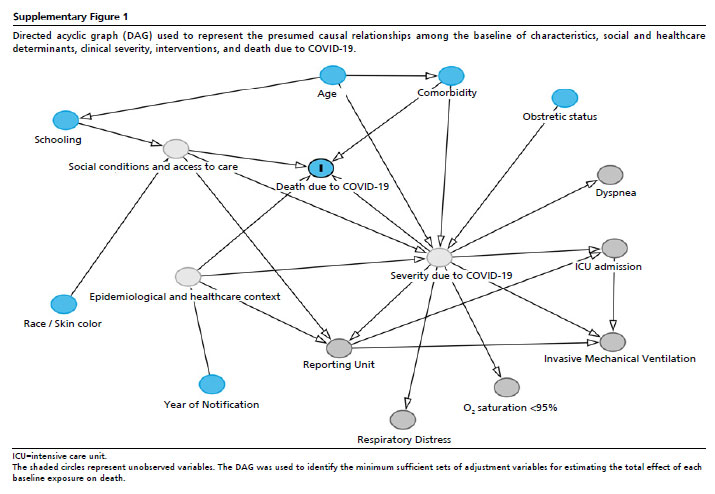
To investigate the relationship between baseline characteristics and death due to COVID-19, prevalence ratios (PR) and their respective 95% confidence intervals (95%CI) were estimated using Poisson regression with a logarithmic link function and robust variance. The selection of covariates was guided by a directed acyclic graph (DAG), developed based on clinical, epidemiological, and temporal knowledge regarding the relationships among the variables. The DAG used to guide model specification is presented in Supplementary Figure 1.
The estimator of interest was defined as the total effect of each baseline exposure on death due to COVID-19, with age, race/skin color, schooling level, obstetric status, and year of notification were evaluated separately. For each exposure, the minimum sufficient set of adjustments was identified based on the criterion of blocking backdoor paths. The DAG indicated the absence of open confounding paths for age, race/skin color, obstetric status, and year of notification; therefore, no additional adjustments were necessary to estimate their total effects. For schooling level, age was identified as the minimum sufficient set of adjustments.
Clinical variables related to disease severity or progression, including dyspnea, respiratory distress, peripheral oxygen saturation <95%, admission to an intensive care unit, and invasive mechanical ventilation, were considered markers or consequences of clinical severity and, therefore, were not included as covariates in the main causal models. Comorbidities were represented in the causal structure of the DAG; however, they had a missing data rate exceeding 80% in the database and were not included in the minimum adjustment sets identified for the main estimates. Regression analyses were performed using complete cases for the variables required in each model, with the actual number of participants and deaths corresponding to each estimate reported. Consequently, the analytical sample size ranged from 309 to 517 on observations.
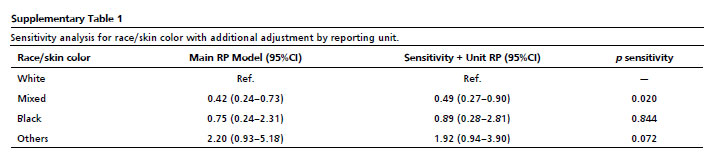
Considering the possibility that the composition of hospital units and referral flows may particularly influence estimates by race/skin color, a sensitivity analysis was conducted with the additional inclusion of the reporting unit. This variable was not part of the minimum set of adjustment variables defined by the DAG, and the analysis was used exclusively to assess the robustness of the estimates to heterogeneity among healthcare units. In 2023, seven records contained information on the progressionof the case; however, one corresponded to death of another cause and was excluded from the outcome analysis, resulting in six records included in the comparison between recovery and death due to COVID-19. Values of
p<0.05 were considered statistically significant. The analyses were performed using R software, version 4.6.1 (R Foundation for Statistical Computing, Vienna, Austria).
Regarding ethical considerations, since this study used secondary data from the public domain that was anonymized and freely accessible (SIVEP-
Gripe/Open DataSUS), with no possibility of identifying participants, the research is exempt from review by the CEP/CONEP system, in accordance with CNS Resolution Nº. 510/2016.
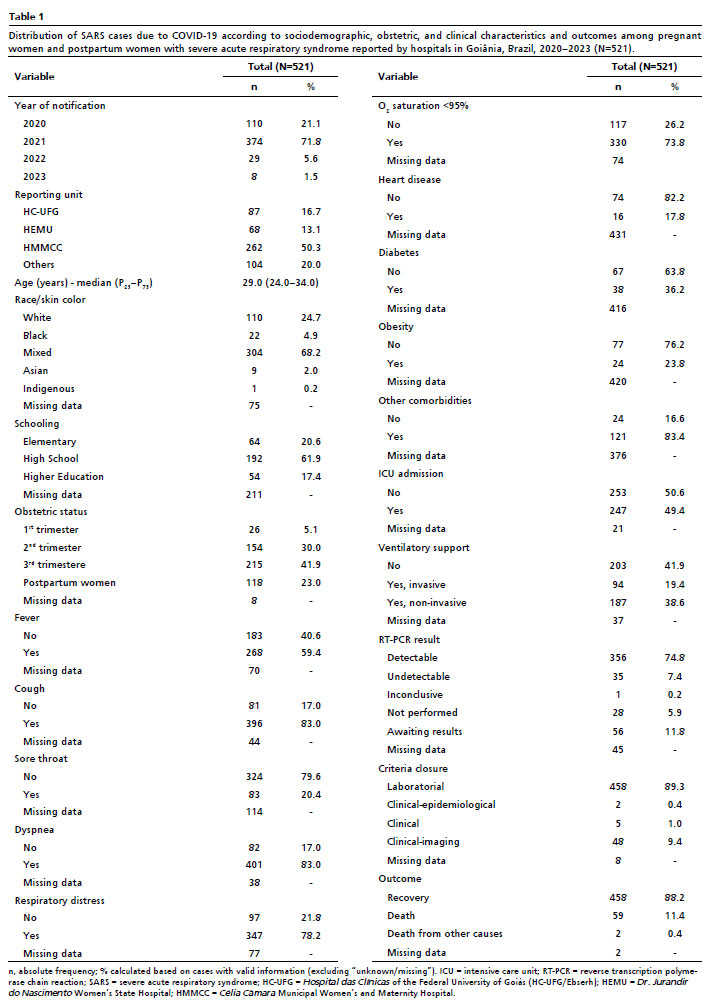
ResultsOf the 521 records, 458 were classified as recovered, 59 as deaths due to COVID-19, two as deaths from other causes, and two had no information on outcome. Considering the 517 records with an outcome defined as recovery or death due to COVID-19, the mortality rate was 11.4%. Most cases were reported in 2021 (71.8%), primarily by the
Hospital e Maternidade Municipal Célia Câmara (50.3%). The median age was 29 years (Q2=24–34), with a predominance of women of mixed skin color (68.2%) and those with a high school education (61.9%). Regarding obstetric status, 41.9% were in the third trimester of pregnancy, 30.0% in the second trimester, 23.0% were postpartum, and 5.1% were in the first trimester (Table 1).
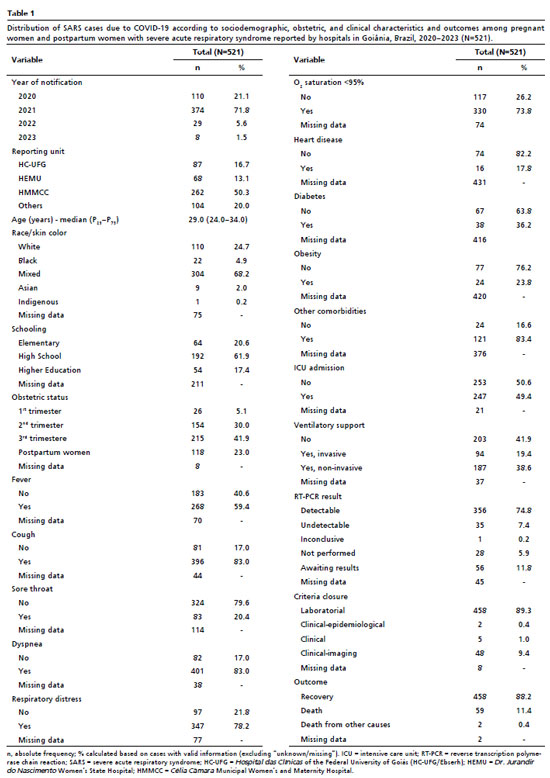
The most frequent symptoms were cough (83.0%), dyspnea (83.0%), respiratory distress (78.2%), oxygen saturation below 95% (73.8%), and fever (59.4%). Among the clinical variables, a high proportion of missing data was observed for comorbidities. Approximately half of the patients were admitted to the intensive care unit (49.4%), and 58.0% required ventilatory support, with non-invasive ventilation being the predominant modality (38.6%). Considering only tests with available results (n=392), SARS-CoV-2 was detected by RT-PCR in 90.8% (95%CI=87.5–93.3%), and discharge occurred predominantly based on laboratorial criteria (89.3%). The clinical course was favorable in 88.2% of the cases, while 11.4% died of COVID-19 (Table 1).
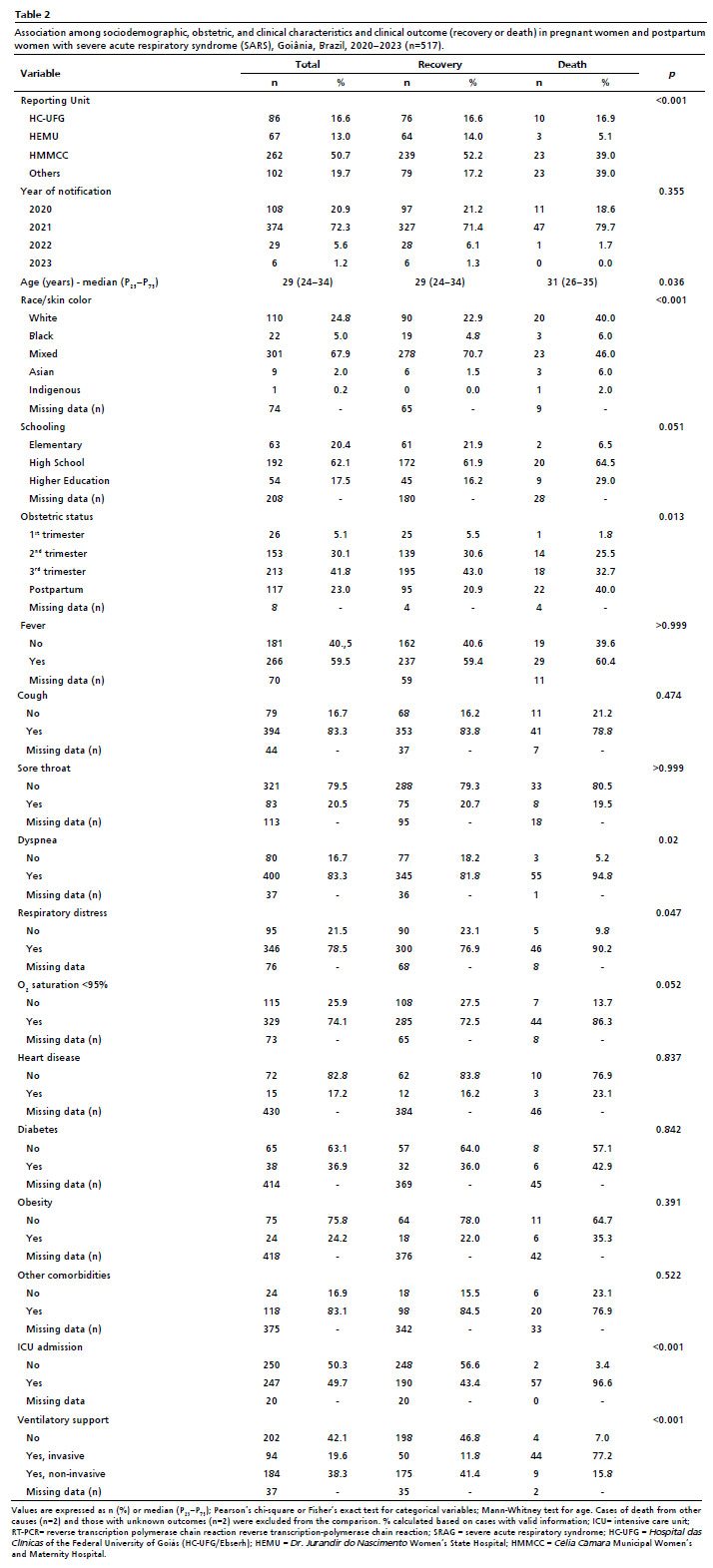
In bivariate comparisons between women who recovered or died, differences were observed with regard to death, which was associated with the reporting facility (
p<0.001), older age (
p=0.036), race/skin color (
p<0.001), obstetric status (
p=0.013), dyspnea (
p=0.02), respiratory distress (
p=0.047), ICU admission (
p<0.001), and the need for ventilatory support (
p<0.001). Among patients who died, a greater median age (31 versus 29 years), a greater frequency of postpartum women (40.0%), dyspnea (94.8%), respiratory distress (90.2%), ICU admission (96.6%), and use of invasive mechanical ventilation (77.2%) were observed. No statistically significant associations were identified between the outcome and the year of notification, schooling level, fever, cough, sore throat, heart disease, diabetes, obesity, or other comorbidities (Table 2).
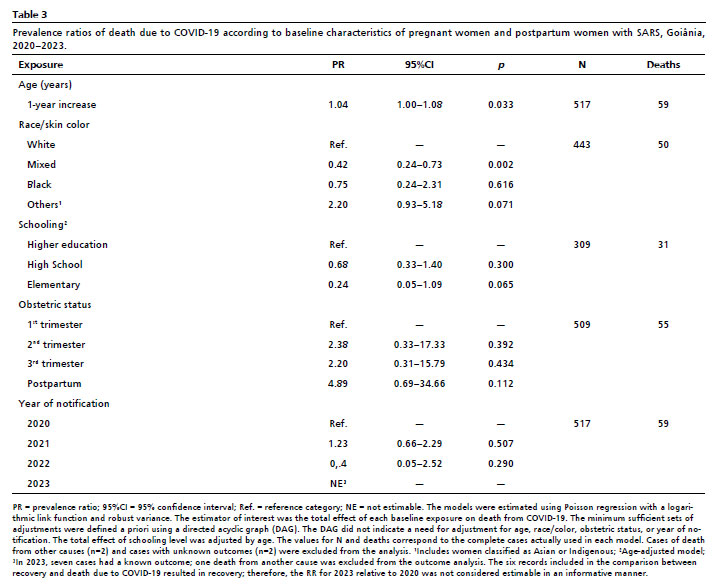
In the DAG-guided Poisson regression analysis, older age was associated with a higher prevalence ratio for death, with a 4% increase for each additional year of age (PR=1.04; 95%CI=1.00–1.08;
p=0.033). Women classified as mixed-race had a lower PR for death compared to white women (PR=0.42; 95%CI=0.24–0.73;
p=0.002), while no statistically significant differences were observed for black women or for the "other" category. Regarding educational attainment, after adjusting for age according to the minimum set defined by the DAG, no statistically significant associations were observed between high school (PR=0.68; 95%CI = 0.33–1.40;
p=0.300) and elementary school (PR=0.24; 95%CI = 0.05–1.09;
p=0.065) and higher education. The estimates for obstetric status and year of notification also showed no statistically significant associations. The comparison for 2023 was not considered informative due to the absence of deaths in that year (Table 3).
In the sensitivity analysis, which additionally included the reporting unit, the estimate for mixed-race women increased from OR=0.42 to OR=0.49 (95%CI=0.27–0.90;
p=0.020), remaining below the unit (Supplementary Table 1).
DiscussionAmong the 517 records with an outcome defined as recovery or death due to COVID-19, 59 deaths were observed, corresponding to 11.4%. Among the baseline characteristics evaluated in the DAG-guided models, older age was associated with a higher prevalence ratio for death, while women classified as mixed-race had a lower prevalence ratio compared to white women. No statistically significant associations were observed for schooling level, obstetric status, or year of notification. At the same time, manifestations of respiratory compromise, admission to an intensive care unit, and invasive mechanical ventilation were more frequent among women who died, indicating a more severe clinical profile. These clinical findings, however, were treated as markers of disease severity rather than as causal exposures in the main model.
The fatality rate of 11.4% should be interpreted in light of the high clinical severity of the analyzed population, consisting exclusively of pregnant women and postpartum women with SARS reported by hospital units. The proportion of deaths observed in this study was higher than that reported in Minas Gerais, where 15 deaths occurred among 227 cases (6.6%),
19 but similar to estimates from national studies involving pregnant women and postpartum women with severe COVID-19, which ranged from 12.3% to 12.7%.
15,16 These differences may reflect characteristics of the included populations, case severity, the epidemiological period, and organizational factors From a pathophysiological perspective, COVID-19-related SARS is characterized by diffuse inflammatory damage to the alveolar-capillary barrier, pulmonary edema, and microthrombosis, changes that impair gas exchange and can result in hypoxemia and respiratory failure.
5,20 During pregnancy, reduced functional residual capacity and increased oxygen consumption decrease respiratory reserve and may contribute to more rapid clinical deterioration in the face of extensive lung injury.
9,11The association between older age and a higher relative risk (RR) of death is consistent with evidence indicating that maternal age is a factor associated with a higher risk of adverse outcomes among pregnant women and postpartum women with severe COVID-19.
15,16 In the present study, each additional year of age was associated with an approximately 4% increase in the RR of death. This result may reflect differences related to physiological reserve and the presence of concomitant clinical conditions in older women. However, this interpretation should be treated with caution, since the variables related to comorbidities were highly incomplete and could not be adequately incorporated into the analyses. Thus, it is not possible to determine to what extent the observed association with age stems from mechanisms directly related to age or from unmeasured conditions associated with it.
The concentration of reports in 2021 was temporally consistent with the increase in maternal mortality during the second wave of the pandemic in Brazil. According to a national analysis by SIVEP-
Gripe, the hospital mortality rate among pregnant women and postpartum women rose from 7.7% in 2020 to 15.4% in 2021.
17 This period coincided with the spread of the P.1 variant, a significant increase in COVID-19 hospitalizations, and the strain on healthcare services, while vaccination of the obstetric population was still being rolled out gradually.
17,21–23 In the present study, however, the year of notification showed no statistically significant association with death. Furthermore, the small number of records in the final years of the series, especially in 2023, when no deaths occurred among records with a defined outcome, limited the precision of the estimates. Since the study did not assess viral variants, vaccination status, bed availability, or time to care, temporal differences should be interpreted as part of the epidemiological and healthcare context, rather than as evidence of a causal effect of the pandemic period.
Dyspnea, respiratory distress, hypoxemia, admission to the intensive care unit, and invasive mechanical ventilation were more frequent among women who died, indicating a profile consistent with severe pulmonary impairment. In COVID-19 pneumonia, inflammatory damage to the alveolar-capillary barrier, associated with pulmonary edema and microthrombosis, impairs gas exchange and results in progressive hypoxemia.
5,20 During pregnancy, reduced respiratory reserve may contribute to more rapid deterioration and desaturation in the presence of extensive lung injury.
8,11 This pattern is consistent with studies that have identified hypoxemia, the need for intensive care, and mechanical ventilation as markers of a worse prognosis in pregnant women and postpartum women with COVID-19.
16,24However, these variables represent manifestations of disease progression or interventions resulting from clinical deterioration and, for this reason, were not included in the primary causal models. Furthermore, the SIVEP-
Gripe registre its occurrence without allowing for an accurate reconstruction of the temporal sequence between clinical manifestations, interventions, and outcome. Therefore, these findings should be interpreted as indicators of clinical severity, rather than as independent causal factors of mortality.
Invasive mechanical ventilation, in particular, was much more common among women who died. This finding is clinically expected, since invasive ventilation is generally employed in cases of advanced respiratory failure, refractory hypoxemia, or acute respiratory distress syndrome.
5,6,20 Thus, its higher frequency among deaths should be understood as an expression of disease severity and the need for life support, rather than as evidence of a deleterious effect of the procedure. The decision to limit the analysis to descriptive findings avoids interpreting an intervention performed after clinical deterioration as a baseline characteristic causally associated with outcome.
In the analyzed sample, postpartum women accounted for a higher proportion of deaths than of women who recovered. In the DAG-based model, however, the postpartum status did not show a statistically significant association with death, and the estimate was accompanied by a wide confidence interval, indicating imprecision. Brazilian studies have described a higher incidence of adverse outcomes during the postpartum period,
13,16 a period characterized by significant hemodynamic and thrombotic changes and in which childbirth may occur against a backdrop of clinical deterioration.
11,16 Possible gaps in postpartum monitoring and care have also been identified as relevant factors.
13 In the present study, however, these mechanisms were not directly measured. Thus, the higher proportion of postpartum women among deaths should be interpreted as a sign of potential vulnerability requiring further investigation, rather than as evidence of an independent effect of the postpartum period on mortality.
The lower estimated relative risk (RR) of death among women classified as mixed skin color, compared to white women, diverges from national evidence indicating a higher incidence of adverse maternal outcomes among black and mixed skin colored women with COVID-19.
13,14,16 This result should not be interpreted as evidence of biological protection associated with race/skin color. Race/skin color is a complex social marker, intersected by structural racism and related to living and working conditions, exposure to SARS-CoV-2, the occurrence of health conditions, timely access to services, and the quality and continuity of care.
13,14 Thus, differences in outcomes by race/skin color should be interpreted in the context of social and healthcare inequalities, rather than as inherent or protective biological characteristics of racial groups.
14,16The inverse association observed may stem from the specific composition of the hospitalized population, differences in referral patterns, and unmeasured characteristics related to socioeconomic conditions and access to care. In the sensitivity analysis, the additional inclusion of the reporting units attenuated the estimate for mixed skin colored women from PR=0.42 to PR=0.49, although the confidence interval remained below unity. The change in the magnitude of the estimate suggests that heterogeneity among units and the composition of care may partially explain the finding, but does not rule out residual confounding, treatment selection, or unmeasured differences in referral processes and access. The interpretation should also consider the incompleteness of race/skin color data, since the corresponding model included 443 women and 50 deaths. If the absence of this information is related to patient characteristics, units characteristics, or the outcome itself, the estimates may have been affected by the selection of the analyzable sample. For these reasons, the association found should be considered exploratory.
For schooling level, the estimate observed in the unadjusted analysis was attenuated after adjustment for age, identified by the DAG as the minimal sufficient set of adjustments. Elementary school had a PR of 0.24 compared to higher education, but with a confidence interval that included unity and no statistical significance. This result illustrates the importance of the causal definition of covariates, since the association observed before adjustment did not persist after controlling by age. Furthermore, schooling level was the baseline variable with the highest proportion of missing data, resulting in only 309 participants and 31 deaths in the corresponding model. The high loss of observations reduces the precision of the estimates and may introduce bias if the availability of this information is not random. Thus, the results regarding educational attainment should not be interpreted as evidence of a protective effect.
Specific comorbidities, such as obesity, heart disease, and diabetes, had a proportion of missing data exceeding 80%, with a small number of valid records, particularly among women who died. Although they were included in the theoretical causal model, they were not part of the minimum adjustment sets identified for the main estimators and could not be reliably explored as additional exposures. The high level of incompleteness data also prevents us from ruling out the possibility residual confounding, especially in the relationships involving age and socioeconomic characteristics. Furthermore, it is not possible to rule out differential completeness of records between women who recovered and those who died, which may introduce information bias and affect the magnitude of the observed associations.
The results have implications primarily for the epidemiological and clinical characterization of the study population. The high frequency of severe respiratory manifestations among women who died underscores the importance of timely recognition of clinical deterioration and coordination between obstetrics, emergency care, and intensive care. Postpartum follow-up also warrants attention given the higher proportion of postpartum women among the deaths, although the present study did not demonstrate a statistically significant association with obstetric status. These implications should be interpreted with caution, as the retrospective, database-based observational design does not allow for estimating the effect of specific monitoring, transfer, or treatment strategies on mortality.
Among the limitations are the use of secondary surveillance data, the high rate of missing values for some variables, the lack of information on vaccination, viral variants, socioeconomic conditions, time to care, and availability of healthcare resources, as well as the inability to precisely establish the temporal nature of certain clinical manifestations and interventions. Heterogeneity among units and their different referral patterns may also have influenced the composition of the study population. Additionally, the small number of events in some categories resulted in imprecise estimates, as observed for obstetric cases and for the final years of the data series. Because they are based on hospital reports from a single municipality, the findings reflect a local healthcare context and may not be directly generalizable to other regions or healthcare networks.
On the other hand, the study uses an official surveillance database, covers four distinct years of the pandemic, and specifically analyzes pregnant women and postpartum women with severe acute respiratory syndrome (SARS) due to COVID-19 in a local context that remains largely unexplored. The DAG-guided analytical reconstruction made it possible to specify the estimator of interest, distinguish baseline characteristics from subsequent markers of severity, and define the adjustment sets based on causal assumptions rather than on statistical criteria derived from the sample itself. The public availability of the analytical dataset, variable dictionary, and codes also enhances the transparency and reproducibility of the study.
In summary, deaths occurred predominantly among women with more severe clinical manifestations. Among the baseline characteristics evaluated, older age was associated with a higher relative risk (RR) of death, while the inverse association observed for race/mixed skin colored should be considered exploratory given the possibility of residual confounding, selection bias, and incomplete data. Schooling level, obstetric status, and year of notification did not show statistically significant associations. The findings reinforce the need to interpret baseline characteristics, the healthcare context, and clinical severity collectively, avoiding the attribution of causal significance to manifestations or interventions that occur during the course of the disease.
Among pregnant women and postpartum women with severe acute respiratory syndrome (SARS) due to COVID-19 reported by hospitals in Goiânia, there were 59 deaths among the 517 records with a defined outcome, corresponding to 11.4%. Among the baseline characteristics evaluated, older age was associated with a higher prevalence ratio for death, while the lower prevalence ratio observed among women of mixed race, compared to white women, should be considered an exploratory finding given the possibility of residual confounding, treatment selection, and heterogeneity among reporting units. Schooling level, obstetric status, and year of notification did not show statistically significant associations. Severe respiratory manifestations, ICU admission, and invasive mechanical ventilation were more frequent among women who died, indicating greater clinical severity, without implying a causal effect of these conditions or interventions on the outcome . The results contribute to the epidemiological and clinical characterization of SARS-related mortality associated with COVID-19 in the obstetric population treated at the hospital studied.
References1. Allotey J, Stallings E, Bonet M, Yap M, Chatterjee S, Kew T,
et al. Clinical manifestations, risk factors, and maternal and perinatal outcomes of coronavirus disease 2019 in pregnancy: living systematic review and meta-analysis. BMJ. 2020; 370: m3320. doi: 10.1136/bmj.m3320
2. Andreucci CB, Knobel R. Social determinants of COVID-19-related maternal deaths in Brazil. Lancet Reg Health Am. 2021; 3: 100104. doi: 10.1016/j.lana.2021.100104
3. Zambrano LD, Ellington S, Strid P, Galang RR, Oduyebo T, Tong VT,
et al. Update: characteristics of symptomatic women of reproductive age with laboratory-confirmed SARS-CoV-2 infection by pregnancy status – United States, January 22-October 3, 2020. MMWR Morb Mortal Wkly Rep. 2020; 69 (44): 1641-7. doi: 10.15585/mmwr.mm6944e3
4. Villar J, Ariff S, Gunier RB, Thiruvengadam R, Rauch S, Kholin A, et al. Maternal and neonatal morbidity and mortality among pregnant women with and without COVID-19 infection: the INTERCOVID multinational cohort study. JAMA Pediatr. 2021; 175 (8): 817-26. doi:10.1001/jamapediatrics.2021.1050
5. Wiersinga WJ, Rhodes A, Cheng AC, Peacock SJ, Prescott HC. Pathophysiology, transmission, diagnosis, and treatment of coronavirus disease 2019 (COVID-19): a review. JAMA. 2020; 324 (8): 782-93. doi: 10.1001/jama.2020.12839
6. Troiano NH, Richter A, King C. Acute respiratory failure and mechanical ventilation in women with COVID-19 during pregnancy: best clinical practices. J Perinat Neonatal Nurs. 2022; 36 (1): 27-36. doi: 10.1097/JPN.0000000000000621
7. Ministério da Saúde (BR). Secretaria de Vigilância em Saúde. Guia de vigilância epidemiológica: emergência de saúde pública de importância nacional pela doença pelo coronavírus 2019 – COVID-19. Brasília (DF): Ministério da Saúde; 2022. 131 p. [
Internet]. [access in 2026 Abr 4]. Available from:
https://www.gov.br/saude/pt-br/centrais-de-conteudo/publicacoes/svsa/covid-19/guia-de-vigilancia-epidemiologica-covid-19_2021.pdf/view8. Dashraath P, Wong JLJ, Lim MXK, Lim LM, Li S, Biswas A,
et al. Coronavirus disease 2019 (COVID-19) pandemic and pregnancy. Am J Obstet Gynecol. 2020; 222 (6): 521-31. doi: 10.1016/j.ajog.2020.03.021
9. Soma-Pillay P, Nelson-Piercy C, Tolppanen H, Mebazaa A. Physiological changes in pregnancy. Cardiovasc J Afr. 2016; 27 (2): 89-94. doi: 10.5830/CVJA-2016-021
10. Sanghavi M, Rutherford JD. Cardiovascular physiology of pregnancy. Circulation. 2014; 130 (12): 1003-8. doi: 10.1161/CIRCULATIONAHA.114.009029
11. Wastnedge EAN, Reynolds RM, van Boeckel SR, Stock SJ, Denison FC, Maybin JA,
et al. Pregnancy and COVID-19. Physiol Rev. 2021; 101 (1): 303-18. doi: 10.1152/physrev.00024.2020
12. Mehta P, McAuley DF, Brown M, Sanchez E, Tattersall RS, Manson JJ. COVID-19: consider cytokine storm syndromes and immunosuppression. Lancet. 2020; 395 (10229): 1033-4. doi: 10.1016/S0140-6736(20)30628-0
13. Menezes MO, Takemoto MLS, Nakamura-Pereira M, Katz L, Amorim MMR, Salgado HO,
et al. Risk factors for adverse outcomes among pregnant and postpartum women with acute respiratory distress syndrome due to COVID-19 in Brazil. Int J Gynaecol Obstet. 2020; 151 (3): 415-23. doi: 10.1002/ijgo.13407
14. Santos DS, Menezes MO, Andreucci CB, Nakamura-Pereira M, Knobel R, Katz L, et al. Disproportionate impact of coronavirus disease 2019 (COVID-19) among pregnant and postpartum Black women in Brazil through structural racism lens. Clin Infect Dis. 2021; 72 (11): 2068-9. doi: 10.1093/cid/ciaa1066
15. Takemoto MLS, Menezes MO, Andreucci CB, Knobel R, Sousa LAR, Katz L,
et al. Clinical characteristics and risk factors for mortality in obstetric patients with severe COVID-19 in Brazil: a surveillance database analysis. BJOG. 2020; 127 (13): 1618-26. doi: 10.1111/1471-0528.16470
16. Siqueira TS, Souza EKG, Martins-Filho PR, Silva JRS, Gurgel RQ, Cuevas LE,
et al. Clinical characteristics and risk factors for maternal deaths due to COVID-19 in Brazil: a nationwide population-based cohort study. J Travel Med. 2022; 29 (3): taab199. doi: 10.1093/jtm/taab199
17. Scheler CA, Discacciati MG, Vale DB, Lajos GJ, Surita FG, Teixeira JC. Maternal deaths from COVID-19 in Brazil: increase during the second wave of the pandemic. Rev Bras Ginecol Obstet. 2022; 44 (6): 567-72. doi: 10.1055/s-0042-1748975
18. Leal LF, Merckx J, Fell DB, Kuchenbecker R, Miranda AE, de Oliveira WK,
et al. Characteristics and outcomes of pregnant women with SARS-CoV-2 infection and other severe acute respiratory infections (SARI) in Brazil from January to November 2020. Braz J Infect Dis. 2021; 25 (5): 101620. doi: 10.1016/j.bjid.2021.101620
19. Godoi APN, Bernardes GCS, Almeida NA, Melo SN, Belo VS, Nogueira LS,
et al. Síndrome respiratória aguda grave em gestantes e puérperas portadoras da COVID-19. Rev Bras Saúde Matern Infant. 2021; 21 (Supl. 2): S471-S480.
http://dx.doi.org/10.1590/1806-9304202100S20000820. Batah SS, Fabro AT. Pulmonary pathology of ARDS in COVID-19: a pathological review for clinicians. Respir Med. 2021; 176: 106239. doi: 10.1016/j.rmed.2020.106239.
21. Bastos LSL, Ranzani OT, Souza TML, Hamacher S, Bozza FA. COVID-19 hospital admissions: Brazil’s first and second waves compared. Lancet Respir Med. 2021; 9 (8): e82-e83.
https://doi.org/10.1016/ S2213-2600(21)00287-322. Faria NR, Mellan TA, Whittaker C, Claro IM, Candido DDS, Mishra S,
et al. Genomics and epidemiology of the P.1 SARS-CoV-2 lineage in Manaus, Brazil. Science. 2021; 372 (6544): 815-21. doi: 10.1126/science.abh2644
23. Covas DT, Abreu AJL, Dias CZ, Ferreira RV, Pereira RG, Julian GS. Adverse events of COVID-19 vaccines in pregnant and postpartum women in Brazil: a cross-sectional study. PLoS One. 2023; 18 (1): e0280284. doi: 10.1371/journal.pone.0280284
24. Péju E, Belicard F, Silva S, Hraiech S, Painvin B, Kamel T,
et al. Management and outcomes of pregnant women admitted to intensive care unit for severe pneumonia related to SARS-CoV-2 infection: the multicenter and international COVIDPREG study. Intensive Care Med. 2022; 48 (9): 1185-96. doi: 10.1007/s00134-022-06833-8
Authors’ contributionCampos APR: conceptualization, data curation, formal analysis, methodology, and manuscript drafting; Oliveira MPL: data curation, formal analysis, and manuscript drafting; Siqueira JM: data curation, formal data analysis, manuscript drafting, review, and editing; Corrêa KS: research, methodology, writing, reviewing, and editing the manuscript; Amaral WN: conceptualization, supervision, project management, writing, reviewing, and editing the manuscript; All authors approved the final version of the article and declare that there is no conflict of interest.
Use of artificial intelligenceGenerative artificial intelligence tools (ChatGPT/Codex, from OpenAI; and NotebookLM, from Google) were used to support linguistic review, assist in the synthesis and organization of information from the consulted sources, and format the references. All suggestions were critically reviewed by the authors, who verified the accuracy of the content, references, analyses, and interpretations and assume full responsibility for the final version. These tools were not used to generate or modify data, nor to autonomously perform statistical analyses.
Data availabilityThe filtered and de-identified dataset, the variable dictionary, and the code used for data selection, processing, and analysis are available on the Open Science Framework (OSF):
https://doi.org/10.17605/OSF.IO/42ZJB.
Received on July 7, 2026
Final version presented on September 15, 2026
Approved on September 17, 2026
Associated Editor: Melania Amorim


 ; Mirella de Paiva Lopes Oliveira2






 Ler em português
 Download PDF
 Imprimir
 Enviar este artigo por email
 Como citar este artigo
 Enviar um comentário
 Mendeley
 Pocket
 Compartilhar no Facebook
 Compartilhar no Twitter