IntroductionPregnancy at extreme ages—both during adolescence and after age 35—has been widely associated with adverse maternal and perinatal outcomes.
1,2 Adolescent pregnancy is considered a public health problem, especially in developing countries, and is linked to increased risks of complications such as preeclampsia, systemic infections, preterm birth, low birth weight, and severe neonatal conditions, as well as a high incidence of pregnancy loss.
1,3,4 In 2023, the global rate of adolescent pregnancy was estimated at 41.3 births per 1,000 adolescents. However,in Brazil, this indicator remains above the global average, at approximately 43.6 per thousand, with significant regional disparities.
5,6 Evidence also points to a bidirectional relationship between low educational attainment and early pregnancy, reinforcing the multifactorial nature of this phenomenon.
1,3,7In contrast to teenage pregnancy, there are women who become pregnant at age 35 or older, especially among first-time mothers, reflecting the demographic and social changes observed in recent decades. The postponement of motherhood has been observed in various contexts and is associated with multiple factors, including greater female participation in the labor market, longer schooling, access to contraceptive methods, and changes in sociocultural and reproductive patterns. At the same time, the literature has highlighted growing concern regarding pregnancy after age 35 due to its association with an increased risk of maternal and perinatal complications, such as gestational diabetes, preeclampsia, postpartum hemorrhage, and fetal death.
7,8Despite the consistent body of evidence regarding the risks associated with extreme maternal ages, there are still few studies that simultaneously evaluate these groups in specific regional contexts—particularly in the countryside of Minas Gerais—while considering both aspects of prenatal care and maternal outcomes within a single analytical model. This gap limits our understanding of local particularities and the planning of more targeted health interventions.
9In the municipality of Governador Valadares, Minas Gerais, data from the
Sistema de Informações sobre Nascidos Vivos (SINASC) (Live Birth Information System) of the
Departamento de Informática do Sistema Único de Saúde (DATASUS)
10 (Department of Information Technology of the Public Health System) show changes in the age profile of pregnant women over the years. In 2024, 3,243 births were recorded; of these, 18.37% were women aged 35 to 49, and 8.6% were adolescents. In contrast, in 2010, among the 3,694 recorded births, the proportion of pregnant adolescentes was higher than pregnant women aged 35 or older, at 15.7% and 11.6%, respectively. These data indicate a shift in the local reproductive profile, characterized by a decline in teenage pregnancies and an increase in pregnancies among women aged 35 or older,
10 underscoring the importance of studying these groups within the context of the local health system.
Given in this context, the objective of this study was to assess prenatal care and maternal outcomes among pregnant adolescents and women aged 35 or older and to compare them with pregnant women aged 19 to 34 who gave birth at the
Hospital Municipal de Governador Valadares, as well as to describe the factors associated with pregnancy at extreme ages.
MethodsThis was a cross-sectional observational study that followed the recommendations of the STROBE (Strengthening the Reporting of Observational Studies in Epidemiology) guidelines. It was based on a preexisting database from a research project titled "Factors Associated with Preterm Birth and Low Birth Weight in Governador Valadares, Minas Gerais: a case-control study,"
11 approved by the Human Research Ethics Committee of the
Universidade Federal de Juiz de Fora (CAAE: 61055716.4.0000.5147). This previous study was conducted from May 2017 to July 2018 at the
Hospital Municipal de Governador Valadares and it was a case-control study, with the case group consisting of preterm and low-birth-weight newborns and the control group consisting of live-born, full-term infants with normal birth weight. Each case was matched with two controls, according to sex and date of birth. The
Hospital Municipal de Governador Valadares was chosen because it is considered a referral center for the cities of Rio Doce Valley, because it is part of the
Sistema Único de Saúde (SUS) (Brazilian Public Health System), and because it is the only facility in the city and region with a Neonatal Intensive Care Unit
. 11Interviews were conducted with puerperium women 24 to 48 hours after delivery. Additional information was obtained by reviewing the puerperium woman's prenatal care records and medical charts. Data were collected by previously trained researchers. All participants signed an informed consent form.
This study analyzed the database from that research, including
Sistema Único de Saúde (SUS) women with live-born infants and excluding twin pregnancies and cases with congenital malformations or genetic syndromes. Participants were classified into three groups according to maternal age at childbirth: Group I: adolescents (12–18 years); Group II: young adults (19–34 years—considered the reference group); and Group III: adults aged 35 years or older (≥35 years).
The following dependent variables were analyzed, along with their respective categorizations: parity (primiparous/multiparous); pregnancy loss (yes/no); gestational diabetes (yes/no); chronic hypertension (yes/no); preeclampsia/eclampsia (yes/no); urinary tract infection (yes/no); number of prenatal visits (fewer than six visits/six visits or more); first prenatal visit (after sixteen weeks/up to sixteen weeks, including exactly 16 weeks); type of delivery (vaginal/cesarean section). The variables educational attainment (less than a high school diploma/high school diploma or higher), household income (two minimum wages or less/more than two minimum wages), and marital status (single/in a relationship), as these are baseline sociodemographic characteristics that may be associated with the outcome under study, was used to reduce structural differences between age groups.
No sample size calculation was performed, as this was a secondary analysis using a database originally constructed through outcome-oriented sampling.
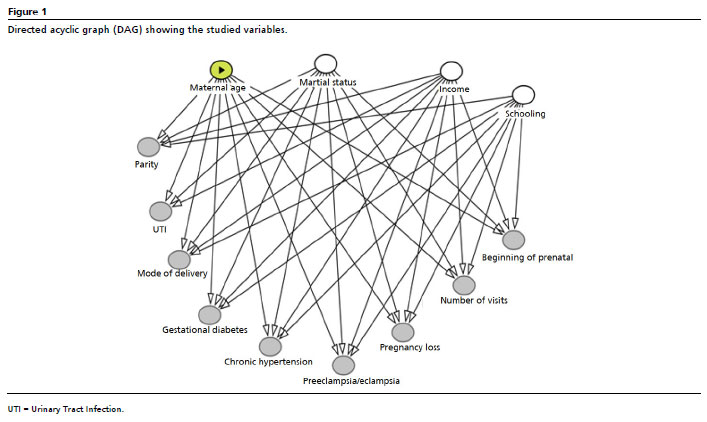
For data analysis, Poisson regression models with robust variance (Huber-White estimator) appropriate for cross-sectional studies with frequent outcomes were fitted to estimate prevalence ratios (PR) and their respective 95% confidence intervals (95%CI). Pregnant women aged 19 to 34 years served as the reference group for all analyses. Separate models were constructed for each maternal outcome, using maternal age group (12–18 years; 19–34 years; ≥35 years) as the exposure variable. The models were adjusted for educational level, household income, and marital status, as these are sociodemographic characteristics potentially related to the outcomes studied. The selection of these covariates was guided by prior epidemiological knowledge and a directed acyclic graph (DAG) (Figure 1). Associations between the variables were initially assessed using the chi-square test. The results of the Poisson models were presented as RR, with corresponding 95%CI and
p-values. An RR greater than 1 indicated a higher prevalence of the outcome in the age group analyzed compared to the reference group (ages 19–34). The analysis was performed using IBM SPSS Statistics.
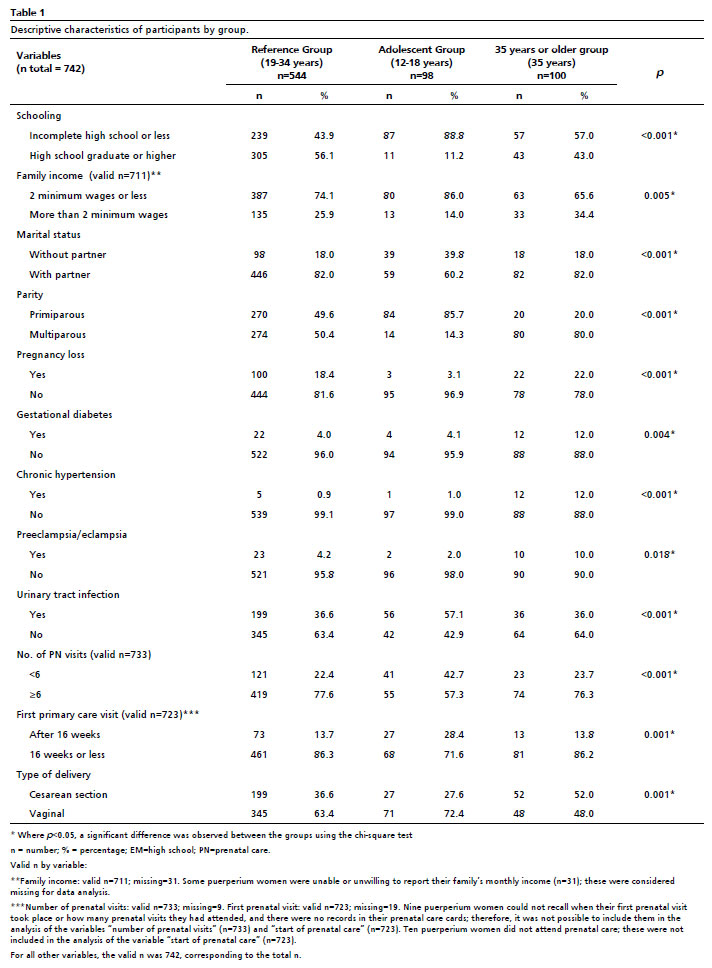
ResultsOf the total 775 pregnant women who participated in the study, 29 were excluded because they were carrying twins, and 4 were excluded due to genetic syndromes or congenital malformations. Thus, 742 pregnant women constituted the final study sample, and of these, 98 (13.20%) were adolescent mothers (ages 12–18), 544 (73.31%) were young adults (ages 19–34), and 100 (13.47%) were 35 years of age or older (≥35 years). The minimum age was 13 years and the maximum age was 46 years. A total of 421 pregnant women (56.7%) resided in the city of Governador Valadares, and the remainder resided in other municipalities in the region. The descriptive characteristics of the participants, including sociodemographic characteristics, obstetric history, clinical complications, and variables related to prenatal care and delivery, are presented in Table 1. The table legend includes a description of missing data by variable, where applicable (Table 1).
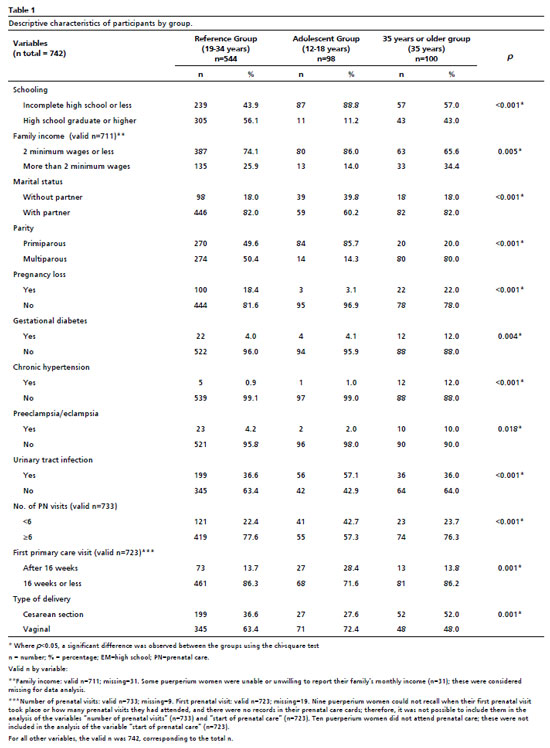
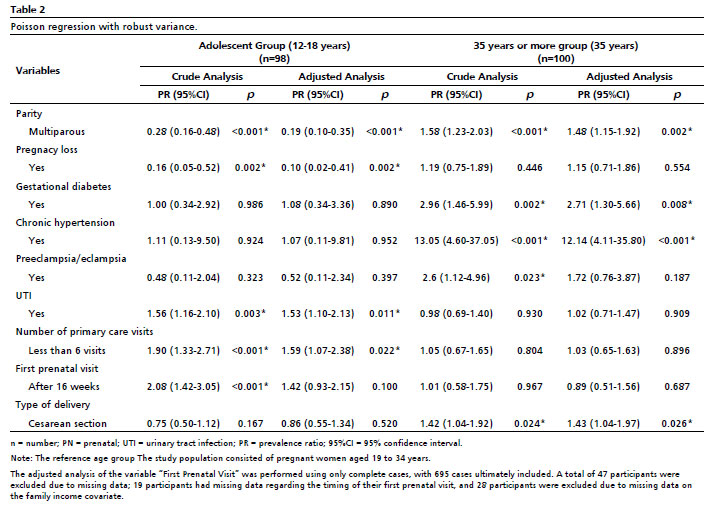
Table 2 details the results of the unadjusted and adjusted analyses (including sociodemographic variables), as well as the respective outcome categories adopted for each dependent variable (Table 2).
In the adjusted analysis, the group of pregnant adolescents (ages 12–18) showed a higher prevalence of urinary tract infection (OR=1.53; 95%CI=1.10–2.13;
p=0.011) and having fewer than six prenatal visits (RR=1.59; 95%CI=1.07–2.38;
p=0.022). In contrast, this group had a lower prevalence of a history of pregnancy loss (OR= 0.10; 95%CI=0.02–0.41;
p=0.002) and of multiparous women (OR=0.19; 95%CI=0.10–0.35;
p<0.001). No statistically significant associations were observed between adolescences and gestational diabetes, chronic hypertension, preeclampsia/eclampsia, or mode of delivery. Regarding the variable "first prenatal visit," in the unadjusted analysis, adolescents had a higher prevalence of beginning prenatal care after 16 weeks compared to women aged 19–34 years (RR=2.08; 95%CI=1.42–3.05;
p<0.001). However, after adjusting for the covariates model, this association lost statistical significance (OR=1.42; 95%CI=0.93–2.15;
p=0.100) (Table 2).
Among women aged 35 years or older, the adjusted analysis revealed a higher prevalence of gestational diabetes (OR=2.71; 95%CI=1.30–5.66;
p=0.008), chronic hypertension (OR=12.14; 95%CI=4.11–35.80;
p<0.001), cesarean delivery (OR=1.43; 95%CI=1.04–1.97;
p=0.026), and multiparity (OR=1.48; 95%CI=1.15–1.92;
p=0.002). No statistically significant associations were identified between maternal age of 35 years or older and a history of pregnancy loss, urinary tract infection, number of prenatal visits, or timing of the first prenatal visit. Regarding the preeclampsia/eclampsia variable, in the crude analysis, women aged 35 to older had a higher prevalence of preeclampsia or eclampsia compared with younger pregnant women (RR=2.36; 95%CI=1.12–4.96;
p=0.023). However, after adjusting for the covariates model, this association lost statistical significance (RR=1.72; 95%CI=0.76–3.87;
p=0.187).
DiscussionThis study identified differences in prenatal care and maternal health status between pregnant adolescents and those aged 35 years or older compared to young pregnant adult (19–34 years). In the adjusted analysis, pregnant adolescentes had a higher prevalence of having fewer than six prenatal visits and developing urinary tract infections during pregnancy, as well as a lower prevalence of history of pregnancy loss and multiparity, when compared to young pregnant adult women. In the unadjusted analysis, the timing of the first prenatal visit was associated with adolescence; however, this association was attenuated and ceased to be statistically significant after adjustment for the covariates model. Among women aged 35 years or older, a higher prevalence of multiparity, gestational diabetes, chronic hypertension, and cesarean delivery was observed. Although preeclampsia was associated with maternal age of 35 years or older in the unadjusted analysis, this association lost statistical significance after adjusting for the covariates model.
The variables educational attainment, income, and marital status were considered in this study as potential confounders defined a priori, based on epidemiological evidence and the DAG designed to explicitly represent the hypothesized causal relationships among the variables in this study. Some studies suggest that adolescents are more likely to have a low level of schooling and lower income, although the direction and mediation of this relationship are complex.
12,13The association between educational attainment and teenage pregnancy is a social issue that has persisted over time. Studies confirm that teenage mothers are more likely to drop out of school, while adolescents with low educational attainment are more likely to become pregnant.
4,13 A woman's educational level in developing countries, such as Brazil, is viewed as one of the main indicators of fertility in the country.
14 According to a study conducted in the Northeast region of Brazil, adolescents aged 15 to 19 with a low level of schooling are twice as likely to have a child compared to adolescents with a higher level of schooling. Teenage mothers often need to drop out or give up their studies because of having a child, and a lack of information at this stage of life leads to unplanned pregnancies.
2,14 At the same time, many adolescents from lower socioeconomic classes may view marriage and starting a family as a better option than pursuing an education, which contributes to teenage pregnancy.
13–15 With regard to prenatal care, this study observed, in this study found, in the analysis adjusted for the covariates model, that women who had completed high school or had a higher level of schooling had a lower prevalence of starting prenatal care after 16 weeks of gestation compared to those who had not completed high school or had a lower level of schooling (PR=0.53; 95%CI=0.35–0.80;
p=0.002), corresponding to a 47% lower prevalence.
The group of pregnant adolescents had a 59% higher prevalence of having fewer than six prenatal visits compared with young pregnant women, regardless of adjustment factors. The cutoff of six visits was maintained in this study because it corresponded to the analytical criterion adopted in the database and to the recommendations in effect at the time of data collection, when the Ministry of Health established six prenatal visits as the minimum benchmark.
16 Although this cutoff is appropriate for the analysis in this study, more recent recommendations have increased the minimum number of visits. In Brazil, the
Rede Alyne (Alyne Network) has set a minimum of seven prenatal visits, a recommendation also included in the 2026 Brazilian Prenatal Care Handbook,
17 while the World Health Organization recommends a minimum of eight visits during pregnancy.
18In the adjusted analysis, pregnant women with a partner had a 32% lower prevalence of having fewer than six visits, demonstrating that, in addition to age, the presence of a partner may influence the number of visits attended. According to Viellas
et al.
19 the possible barriers that lead pregnant women to attend fewer prenatal visits are related to a lower level of schooling and the absence of a partner, which is consistent with the findings of this study. A study conducted in the State of Ceará showed that the majority of pregnant adolescents (42.42%) were unmarried, and one of the reasons for this is that, in most cases, pregnancy occurs accidentally and sexual relations are occasional, which may be one of the reasons for the higher rates of partners abandoning them in this population.
20 It is worth emphasizing the importance of prenatal care, especially at this stage of life, to prevent potential complications for the mother and the fetus and to facilitate communication among healthcare professionals throughout pregnancy.
19The results of this study found that pregnant adolescents had a 53% higher prevalence of developing urinary tract infections. It is currently understood that pregnancy alone is not considered a risk factor for developing urinary tract infections. Consistent with the findings of this study, research has shown that pregnant adolescents may be more susceptible to urinary tract infections. One possible explanation, suggested by literature, is that pregnant adolescents may engage in more sexual activity during pregnancy compared to older women. Furthermore, there is evidence of a lower number of prenatal visits in this group, as discussed earlier. Additionally, limited recognition of infection symptoms may also contribute to delays in initiating treatment.
21The pregnant adolescents in this study had a 90% lower prevalence of a history of pregnancy loss. Similarly, Karabulut
et al.
22 found that the rate of spontaneous pregnancy loss increased with the age of the pregnant women; that is, it was higher among women over 35 years of age and lower among pregnant adolescents.
22 One possible explanation described in the literature is the fact that, proportionally, as the female reproductive system ages, fertility declines, and with it, the risk of spontaneous pregnancy loss increases due to a decrease in oocytes and hormonal changes,
23 as well as chromosomal abnormalities and ectopic pregnancy. In this context, the results of this study differed from those reported by Magnus
et al.,
24 who observed a J-shaped pattern in the association between maternal age and the risk of spontaneous pregnancy loss, with a higher risk among younger women and, above all, among those aged 45 or older. The risk was 15.8% among women under 20 years of age, 9.8% among those aged 25–29, and 53.6% among women aged 45 or older.
24In this study, a higher prevalence of gestational diabetes, chronic hypertension, and preeclampsia or eclampsia was observed among pregnant women aged 35 or older, a finding consistent with previous studies.
25,26 Evidence from other studies and meta- analyses indicate that women aged 35 to 39 are nearly twice as likely, and those aged 40 or older up to four times as likely, to develop diabetes mellitus compared to younger women.
27,28 These mechanisms may have contributed to the observed results; however, the present study was not designed to test them directly.
Furthermore, regarding reproductive health, this study found that 80% of pregnant women aged 35 or older were multiparous, representing the highest percentage among the variables analyzed. The prevalence of multiparity It was 48% higher among women aged 35 or older than among pregnant women aged 19 to 34. Consistent with this finding, Aldrighi
et al.
29 found in their study that 75% of pregnant women over the age of 35 were multiparous. Starting a family with a new partner may explain the desire to become pregnant after age 35 and, consequently, the desire for another child.
29Pregnant women aged 35 or older also had a 43% higher prevalence of cesarean delivery; possible explanations include pre-pregnancy conditions and obstetric complications, which are more prevalent in this population due to increased risk factors caused by the aging process.
30,31 However, in some cases, even in the absence of risk factors, these pregnant women are still categorized as "high risk," and this may influence the physician's preference for this type of delivery.
31,32 Some studies suggest that being 35 years of age or older is an independent risk factor for cesarean section, since as the uterus ages, we observe a reduction in the effectiveness of its contractions, a decrease in the number of oxytocin receptors, as well as an increase in the duration of labor and poorer labor progression.
26,27,32 The high cesarean section rates among pregnant women aged 35 or older may result from a combination of maternal comorbidities and physician preferences.
31,32In this study, a cutoff of 35 years was used to categorize advanced maternal age, as has historically been done in the obstetric literature.
2,26,28,32 However, maternal age should be understood as a continuous variable, since obstetric and perinatal risks tend to increase progressively with advancing age. Furthermore, studies show heterogeneity regarding the cutoff points used to define categories of advanced maternal age, which requires caution in interpreting 35 years or older as a universal biological threshold.
2,28,32 In this context, the categorization adopted in this study should be interpreted as an analytical definition, rather than as an indication of an abrupt change in obstetric risk at age 35. Moreover, studies that stratify maternal age into different age groups recognize that the association between maternal age and obstetric outcomes exhibits a progressive pattern and may vary in magnitude depending on the age group, particularly among pregnant women aged 40 years or older.
2,28As for limitations, this study is subject to recall bias among puerperium women, as well as possible omissions and recording errors in prenatal records and medical charts. This is a consecutive, single-center sample, which limits its external validity. Furthermore, as this is a secondary analysis of a database with outcome-oriented sampling, there are limitations regarding representativeness and the estimation of incidence rates. Selecting the sample from a study originally designed to investigate preterm birth and low birth weight may introduce selection bias (collider effect), and the observed associations should be interpreted with caution. The cross-sectional design precludes causal inferences and the establishment of temporal relationships. Finally, the presence of categories with small cell sizes may result in unstable estimates and wide confidence intervals; therefore, the results should be analyzed with caution. In the region where this study was conducted, there is a scarcity of published studies on this topic. This study can serve as a source of regional epidemiological data, as well as guide healthcare professionals and administrators in understanding the profile of pregnant women treated at the hospital, the prenatal care provided, and maternal outcomes, thereby shedding some light on the risks that pregnancy may pose to women according to their age.
In this hospital sample, pregnant adolescents and those aged 35 or older had a higher prevalence of social vulnerabilities, inadequacies in prenatal care components, and specific maternal complications when compared to pregnant women aged 19 to 34. The interpretation of these results should take into account the cross-sectional design, the hospital-based nature of the sample, and the limitations inherent in the use of a secondary database.
References1. Vaz RF, Monteiro DLM, Rodrigues NCP. Tendências da gravidez na adolescência no Brasil. Rev Assoc Med Bras. 2016; 62 (4): 330-5. DOI: 10.1590/1806-9282.62.04.330
2. Lean SC, Derricott H, Jones RL, Heazell AEP. Advanced maternal age and adverse pregnancy outcomes: a systematic review and meta-analysis. PLoS One. 2017; 12 (10): e0186287. DOI: 10.1371/journal.pone.0186287
3. World Health Organization (WHO). Adolescent pregnancy [Internet]. Geneva: WHO; 2020 [access in 2021 Nov 20]. Available from:
https://www.who.int/news-room/fact-sheets/detail/adolescent-pregnancy4. Damasceno AAA, Cardoso MA. Parturientes adolescentes em Cruzeiro do Sul, Acre: características socioeconômicas e obstétricas. Ciênc Saúde Colet. 2024; 29 (1): e02812023. DOI: 10.1590/1413-81232024291.02812023
5. Monteiro DLM, Martins JAFS, Rodriguez NCP, Miranda FRD, Lacerda IMS, Souza FM,
et al. Adolescent pregnancy trends in the last decade. Rev Assoc Med Bras. 2019; 65 (9): 1209-15. DOI: 10.1590/1806-9282.65.9.1209
6. United Nations. The Sustainable Development Goals: extended report 2024 [Internet]. New York: United Nations; 2024 [access in 2025 Jan 10]. Available from:
https://unstats.un.org/sdgs/report/2024/7. Lelis CF, Prietsch SOM, Cesar JA. Gravidez não planejada no extremo sul do Brasil: prevalência, tendência e fatores associados. Ciênc Saúde Colet. 2024; 28 (9): e11122023.
https://doi.org/10.1590/1413-81232024295.111220238. Sugai S, Nishijima K, Haino K, Yoshihara K. Pregnancy outcomes at maternal age over 45 years: a systematic review and meta-analysis. Am J Obstet Gynecol MFM. 2023; 5 (4): 100885. doi:10.1016/j.ajogmf.2023.100885
9. Nunes JT, Gomes KRO, Rodrigues MTP, Mascarenhas MDM. Qualidade da assistência pré-natal no Brasil: revisão de artigos publicados de 2005 a 2015. Cad Saúde Colet. 2016 Apr; 24 (2): 252-61. DOI: 10.1590/1414-462X201600020171
10. Ministério da Saúde (BR). Departamento de Informática do SUS (DATASUS). Estatísticas vitais [Internet]. Brasília (DF): Ministério da Saúde; 2025. [access in 2025 Jan 15]. Available from:
http://www2.datasus.gov.br/Datasus/index.php?area=0205&id=693611. Defilipo EC. Fatores associados à prematuridade e ao baixo peso ao nascer em Governador Valadares, Minas Gerais: estudo caso-controle [tese]. Juiz de Fora (MG): Universidade Federal de Juiz de Fora; 2019.
12. Cook SMC, Cameron ST. Social issues of teenage pregnancy. Obstet Gynaecol Reprod Med. 2015; 25 (9): 243-8. DOI:
https://doi.org/10.1016/j.ogrm.2015.06.001 13. Mohr R, Carbajal J, Sharma B. The influence of educational attainment on teenage pregnancy in low-income countries: a systematic review. J Soc Work Glob Community. 2019; 4 (1): 19–31 DOI: 10.5590/JSWGC.2019.04.1.02
14. Gupta N, Leite IC. Tendências e determinantes da fecundidade entre adolescentes no Nordeste do Brasil. Perspect Int Planif Fam. 2001; 45: 24-9.
15. UNICEF. Early childbearing [
Internet]. New York: UNICEF; 2022. [access in 2022 Nov 29]. Available from:
https://data.unicef.org/topic/child-health/adolescent-health/16. Ministério da Saúde (BR). Saúde Brasil 2012: uma análise da situação de saúde e dos 40 anos do Programa Nacional de Imunizações. Brasília (DF): Ministério da Saúde; 2013. [access in 2025 Jan 15]. Available from:
https://pesquisa.bvsalud.org/brasil/resource/pt/biblio-156070817. Ministério da Saúde (BR). Secretaria de Atenção Primária à Saúde. Departamento de Gestão do Cuidado Integral. Caderneta Brasileira da Gestante. Brasília (DF): Ministério da Saúde; 2026. [access in 2025 Jan 15]. Available from:
https://www.gov.br/saude/pt-br/assuntos/saude-de-a-a-z/s/saude-da-mulher/publicacoes/caderneta-brasileira-da-gestante.pdf18. World Health Organization (WHO). WHO recommendations on antenatal care for a positive pregnancy experience. Geneva: WHO; 2016. [access in 2025 Jan 15]. Available from:
https://www.who.int/publications/i/item/978924154991219. Viellas EF, Domingues RMSM, Dias MAB, Gama SGN, Theme Filha MM, Costa JV,
et al. Assistência pré-natal no Brasil. Cad Saúde Pública. 2014; 30 (Suppl. 1): S85–S100. DOI: 10.1590/0102-311X00126013.
20. Ponte Jr GM, Ximenes Neto FRG. Gravidez na adolescência no município de Santana do Acaraú, Ceará, Brasil. Rev Eletr Enferm. 2004; 6 (1): 25-37.
https://doi.org/10.5216/ree.v6i1.80221. Leppälahti S, Gissler M, Mentula M, Heikinheimo O. Is teenage pregnancy an obstetric risk in a welfare society? BMJ Open. 2013; 3 (8): e003225. DOI: 10.1136/bmjopen-2013-003225.
22. Karabulut A, Ozkan S, Bozkurt AI, Karahan T, Kayan S. Perinatal outcomes in adolescent and advanced age pregnancies. J Obstet Gynaecol. 2013; 33 (4): 346-50. DOI: 10.3109/01443615.2013.767786.
23. Hassold T, Chiu D. Maternal age-specific rates of chromosomal abnormalities. Hum Genet. 1985; 70 (1): 11-7. doi: 10.1007/BF00389450
24. Magnus MC, Wilcox AJ, Morken NH, Weinberg CR, Håberg SE. Role of maternal age and pregnancy history in risk of miscarriage: prospective register based study. BMJ. 2019; 364: l869. DOI: 10.1136/bmj.l869
25. Glick I, Kadish E, Rottenstreich M. Management of pregnancy in women of advanced maternal age. Int J Womens Health. 2021; 13: 751-9. DOI: 10.2147/IJWH.S283216
26. Kahveci B, Melekoglu R, Evruke IC, Cetin C. Effect of advanced maternal age on perinatal outcomes. BMC Pregnancy Childbirth. 2018; 18 (1): 343. DOI: 10.1186/s12884-018-1984-x
27. Frick AP. Advanced maternal age and adverse pregnancy outcomes. Best Pract Res Clin Obstet Gynaecol. 2021; 70: 92-100. DOI: 10.1016/j.bpobgyn.2020.07.005
28. Khalil A, Syngelaki A, Maiz N, Zinevich Y, Nicolaides KH. Maternal age and adverse pregnancy outcome. Ultrasound Obstet Gynecol. 2013; 42 (6): 634-43. DOI: 10.1002/uog.12494
29. Aldrighi JD, Wall ML, Souza SRRK. Vivência de mulheres na gestação em idade tardia. Rev Gaucha Enferm. 2018; 39: e2017-0112. DOI: 10.1590/1983-1447.2018.2017-0112
30. Janoudi G, Kelly S, Yasseen A, Hamam H, Moretti F, Walker M. Factors associated with increased tates of caesarean section in women of advanced maternal age. J Obstet Gynaecol Can. 2015; 37 (6): 517-26. doi: 10.1016/s1701-2163(15)30228-0
31. Rydahl E, Declercq E, Juhl M, Maimburg RD. Caesarean section on a rise – does advanced maternal age explain the increase? A population register-based study. PLoS One. 2019; 14 (1): e0210655. DOI: 10.1371/journal.pone.0210655.
32. Pinheiro RL, Areia AL, Pinto AM, Donato H. Advanced maternal age: adverse outcomes of pregnancy, a meta-analysis. Acta Med Port. 2019; 32 (3): 219-26. DOI: 10.20344/amp.11057
AcknowledgmentsAll the authors would like to thank the
Coordenação deAperfeiçoamento de Pessoal de Nível Superior – Brasil (CAPES) (Improvement of Higher Education Personnel) – Funding Code 001; and the PROQUALI Program at the
Universidade Federal de Juiz de Fora for the doctoral fellowship awarded to the first author during the course of this study.
Authors' contributionDefilipo EC: conceptualization and design; research and data collection; data analysis and interpretation; manuscript drafting.
Chagas PSC, Ferreira ACM, Campos JA, Gomes L, Soares AL, and Ribeiro LC: conceptualization and design; data analysis and interpretation; manuscript drafting.
All authors approved the final version of the article and declare that they have no conflict of interest.
Data availabilityThe entire dataset supporting the results of this study was published in the article itself.
Received on December 29, 2025
Final version presented on August 19, 2026
Approved on August 20, 2026
Associated Editor: Melania Amorim


 ; Paula Silva de Carvalho Chagas2






 Ler em português
 Download PDF
 Imprimir
 Enviar este artigo por email
 Como citar este artigo
 Enviar um comentário
 Mendeley
 Pocket
 Compartilhar no Facebook
 Compartilhar no Twitter